










Everyone’s an armchair expert on AI these days
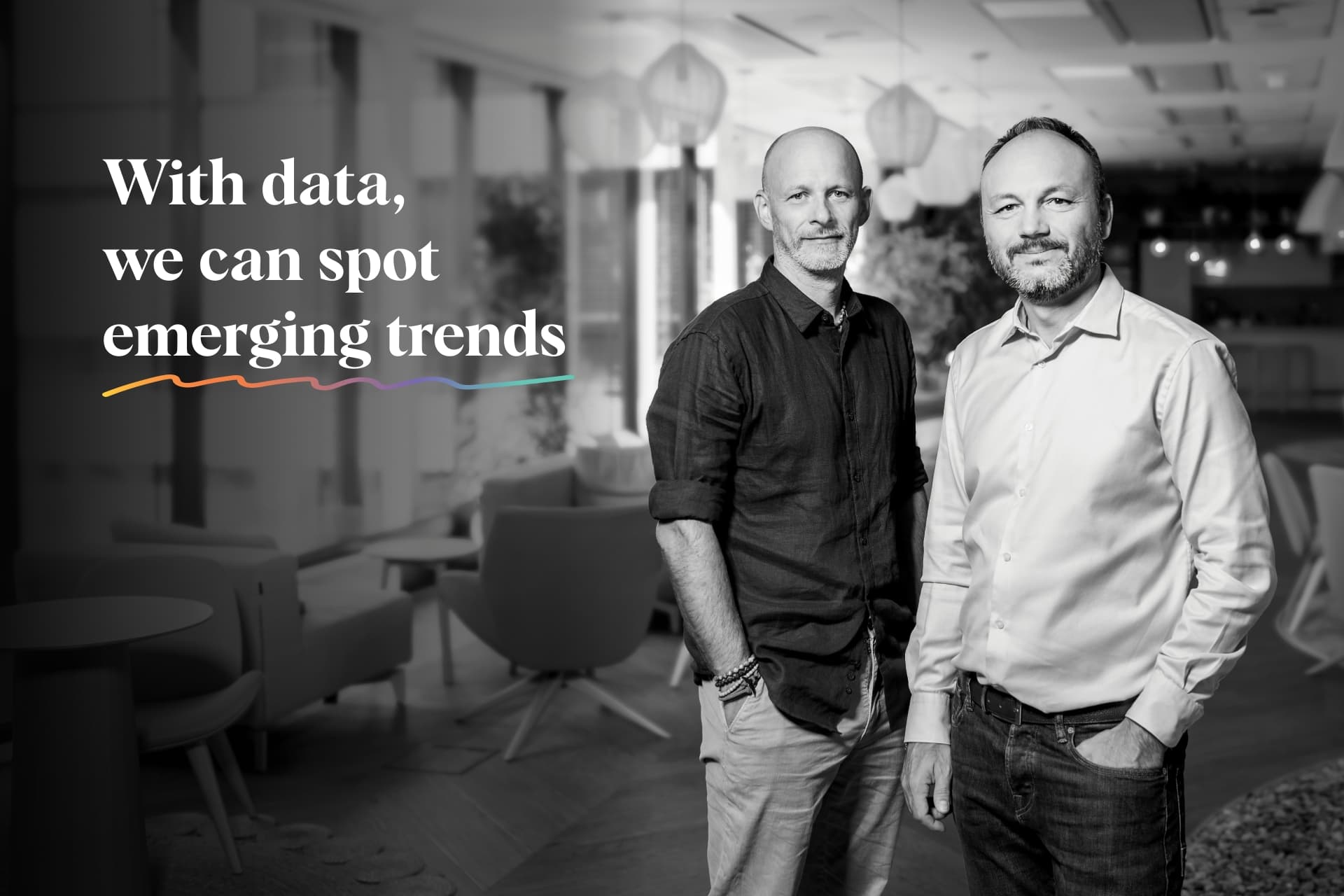
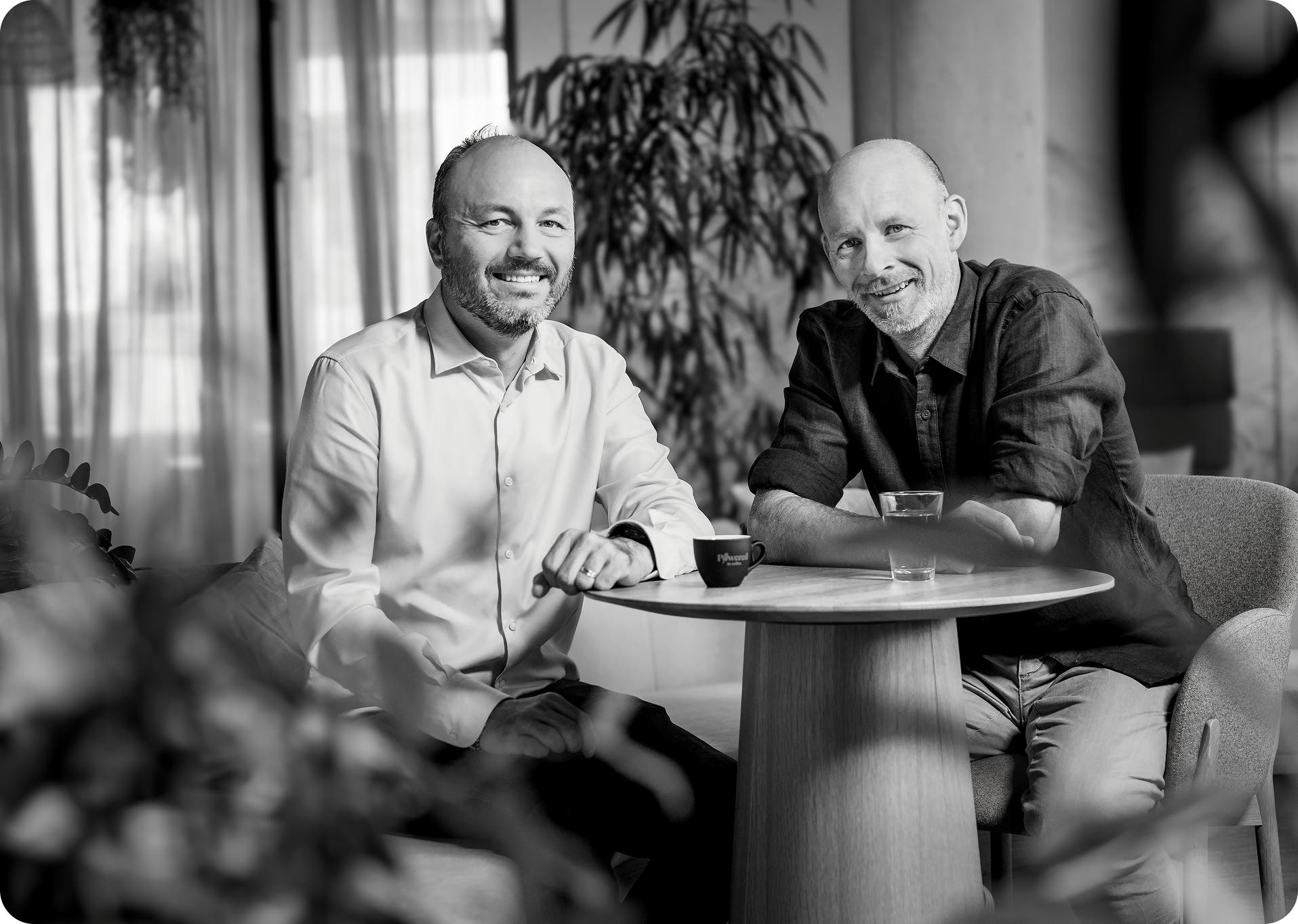
How is the job market changing? How can you prepare your company for AI or demographic decline? Alma Career's director Milan Jasný, along with the head of products for the entire group, Alfred Simuna, describe what can be read from our data and how we can help you.
Do you have a trick for staying open to new initiatives? How to stay adaptable?
Milan: I’d recommend intentionally exposing yourself to new things. Recently, we had a two-day training course where the instructor forced us to change seats after each break. So that everyone sat somewhere else and next to someone different. At first, we were annoyed by it, but by the second day, we were doing it ourselves. No one even had to remind us. So adaptation can sometimes be very quick. And like other skills, it can be trained.
Alfi: I believe that it starts to form in childhood and adolescence. Sports help a lot – a person adapts to the opponent, the pace of the game, and changing conditions. Similarly, traveling requires you to orient yourself in a foreign environment and accept a different culture. In short, anything that takes a person out of their comfort zone. I know both well from personal experience and confirm that you experience moments that teach you adaptation. There are even companies that value experience from abroad or in sports and consider it an important criterion when selecting people for specific positions.
What changes do you think Czech companies will need to adapt to in the coming months and years?
Milan: The first major challenge is demographic development. There’ll be fewer people of working age, and within 10 to 15 years, the strongest cohorts from the early 1970s will be retiring. Therefore, companies will need to address how to replace them. New technologies, especially artificial intelligence, can help. But it is still somewhat unclear. Will companies need fewer people? Or the same number of people, but with significantly increased efficiency?
Alfi: Artificial intelligence will certainly bring fundamental changes to the functioning of companies, their business models, and people's approach to work. The short-term impacts of AI are often overestimated, while long-term effects are underestimated – that’s why some expected a major revolution this year. Logically, adaptation is slower. However, in the long run, it will be essential for companies to embrace artificial intelligence and learn to work with it. Without this, their survival will prove very difficult.
Can a company and its culture be set up to deal with any incoming changes? Or does it only exist in PowerPoint presentations?
Milan: It’s an ideal that is very difficult to achieve in practice. It’s crucial for companies to actively notice emerging changes and trends. So that they can change things in time. Which is in itself complicated. On the whole, large companies have their inertia. They are like an oil tanker that changes direction with difficulty. In reality, changes usually occur in smaller teams within the company, where pioneers and innovators operate. They are the ones who can inspire and engage the rest of the organization.
Alfi: I agree. Innovation needs to be demanded from line managers and their teams. The more people are open to new stimuli, the greater the chance that the entire company will move forward. Innovation cannot be implemented by an order from above. The role of management is to support progress from below. And it’s good to acknowledge that behind every change is a lot of work. It doesn’t happen by itself – it always depends on whether you have enough people in the company willing to invest that energy.
Milan: Most people don’t like changes. It’s human nature. In every company, you’ll find a few enthusiasts who try new artificial intelligence applications, but most employees have not even encountered them yet. Some even actively resist new developments. Therefore, it’s unrealistic to expect that you can undergo digital transformation in a short time. The company can initiate it, but people must gradually adopt it – that period cannot be skipped. Open communication and an authentic company culture are essential. It’s necessary for people to see why the change is coming. And what it will offer them and the entire company.
How can Alma Career products ease the transition for companies?
Milan: For companies, the benefit is that in addition to job portals, we cover the entire employee lifecycle, including employee surveys. For example, Arnold acts as a digital partner that asks people for feedback, helping companies to monitor every period of change, to identify gaps in motivation and employee engagement, and to understand what needs to be addressed.
Alfi: Atmoskop operates in a similar way, focusing on evaluating company culture. Authentic feedback from employees is of immense value to people today. Especially those who are eager to innovate and move things forward want to know where they can truly utilize their skills and energy. Our tools for selecting new colleagues are of equal importance. No one wants to hire someone who will hinder innovation – they’re looking for people who have the courage to remain open-minded. And this is where our Teamio significantly assists companies.
How does Alma Career actually respond to demographic and technological changes within its business?
Milan: Our great advantage is that we have access to data, allowing us to detect emerging trends and changes before they become widely recognized. Today, for instance, we see that companies are hiring significantly less than in the post-COVID period, but at the same time, they place much greater emphasis on quality and want to have the best selection possible. Our services adapt to this situation. When we look at the job market, we distinguish three groups that we internally refer to as "ponds." The first consists of people actively seeking work – we serve them through our portals Jobs.cz, Prace.cz, or Jobs round the corner. The second pond represents people who would change jobs but are unwilling to do anything extra for it. For them, we continuously develop our international CV database, where they simply need to upload their CVs, and companies can select from them. And finally, there is the third, largest pond – passive candidates who are not considering a job change at all. Our new product Nelisa specifically targets them, it can reach out to people through social networks. This way, companies can build their brand even before candidates start actively searching or offer them an opportunity that convinces them to make a change.
Alfi: Over the years, we have learned that the labor market goes through two cycles – sometimes there are few vacancies, while at other times there is less demand from candidates. For us, it’s crucial to estimate when to focus more on companies and when to focus on candidates. Of course, we can never completely ignore one group. At the same time, we are always looking ahead. We monitor the preferences of the youngest generations and how the very way of job searching is changing. Today, we can reach out to people for companies on social networks, and other channels are gradually being tested; in short, it’s necessary to be where candidates actually are. For example, artificial intelligence can significantly speed up and simplify the process of searching for and selecting candidates. However, it also brings risks: for instance, candidates may create a "perfectly polished" profile tailored to a specific position, even if they lack real experience. That’s why it will be absolutely essential in the future to provide companies with truly trustworthy and verified information about candidates.
Last year, we discussed in the yearbook that you’re preparing a unified platform for job portals, which will serve as a kind of "framework" across the countries where Alma Career operates. What’s the status of this?
Alfi: We’re starting with Prace.cz, which is the flagship of the entire change. We’ve developed, for example, a completely new system for matching vacancies and demand. Thanks to AI, we can rank vacancies for candidates by relevance instead of by time – and in tests, we see that this way we can deliver more candidates. On Prace.cz, some users will be able to test the new search functionality in the coming months. We’re also preparing a new design and gradually want to add more functionalities that we’re developing for all our portals within the platform. It’s a great experience for us. In every country where Alma Career operates, there’s something unique running – and now we have the opportunity to scale these strengths to all markets.
One of the future projects is also the integration of products like Arnold and Nelisa into Teamio, so that everything is in one place. Is this a reflection of a broader strategy to focus mainly on recruitment?
Milan: Definitely. We understand recruitment best, and after a period in which we expanded our focus beyond this area, we’re increasingly returning to it. I believe our clients expect this as well.
Alfi: We want to be their partner from the moment they define who they’re looking for, until the point when the new employee is fully integrated into the company. And to offer them a quality and connected ecosystem of products for the entire journey. In the last annual report, we also mentioned that the Czech Republic is effectively out of the crisis, but we have not yet internalized this. Are we further along today? According to data from Alma Career, companies are more willing to invest in their long-term development, whether in technology or employee training, which suggests some optimism.
Milan: So far, we’ve assessed that optimism based on how much companies are hiring. This isn’t happening today; hiring is down. But the question is whether the entire paradigm is changing. Whether companies are investing more in technological innovations, such as artificial intelligence. Thus, optimism may be manifesting differently than through new hires.
Alfi: It’s up to each company to choose its strategy – whether it sees artificial intelligence as an opportunity for significant growth or more as a tool for cost reduction. It’ll certainly go in both directions. However, when we looked at the data, we found that the demand for AI specialists is still minimal. They appear only rarely in job advertisements. It seems that investments in technology often remain at the level of those PowerPoint presentations. Perhaps companies are more likely counting on developing AI experts from their own staff.
And we’re back to adaptation…
Alfi: We’ve been saying for a long time that all companies will eventually become technological. The number of digital roles was supposed to grow rapidly, but the reality was slower – for many companies, it was unimaginable to build teams of product managers, designers, and engineers in their business. Now artificial intelligence is coming, and it can be the impetus that accelerates the entire transformation. However, we can’t yet accurately estimate what this will do to the job market in the long term.
Milan: Unlike previous revolutions, such as the internet or mobile phones, one thing is different this time. It’s an open secret on the market that it may not be possible without AI in three years. Those who do not adapt will disappear from the market. While mobile internet was ignored by many companies for some time, they now visibly fear missing out on something. Although this is not yet reflected in job advertisements.
Alfi: The hype around AI is enormous today. Just look at the number of independent 'AI consultants'. While there were only a few experts in the market when SEO or UX was starting, today nearly as many people are involved in AI as are armchair pundits when the national team plays.
And finally, a bit more personally: What do you find most difficult to adapt to in life?
Alfi: I find it most difficult to adapt to the fact that time flies faster than I’d like.
Milan: I find it difficult to accept things that lack logic. Whether it’s new legislation or a new process in the company. I really struggle with nonsense. I wish there were less of it.

Why Training Alone Won’t Keep Employees from Leaving
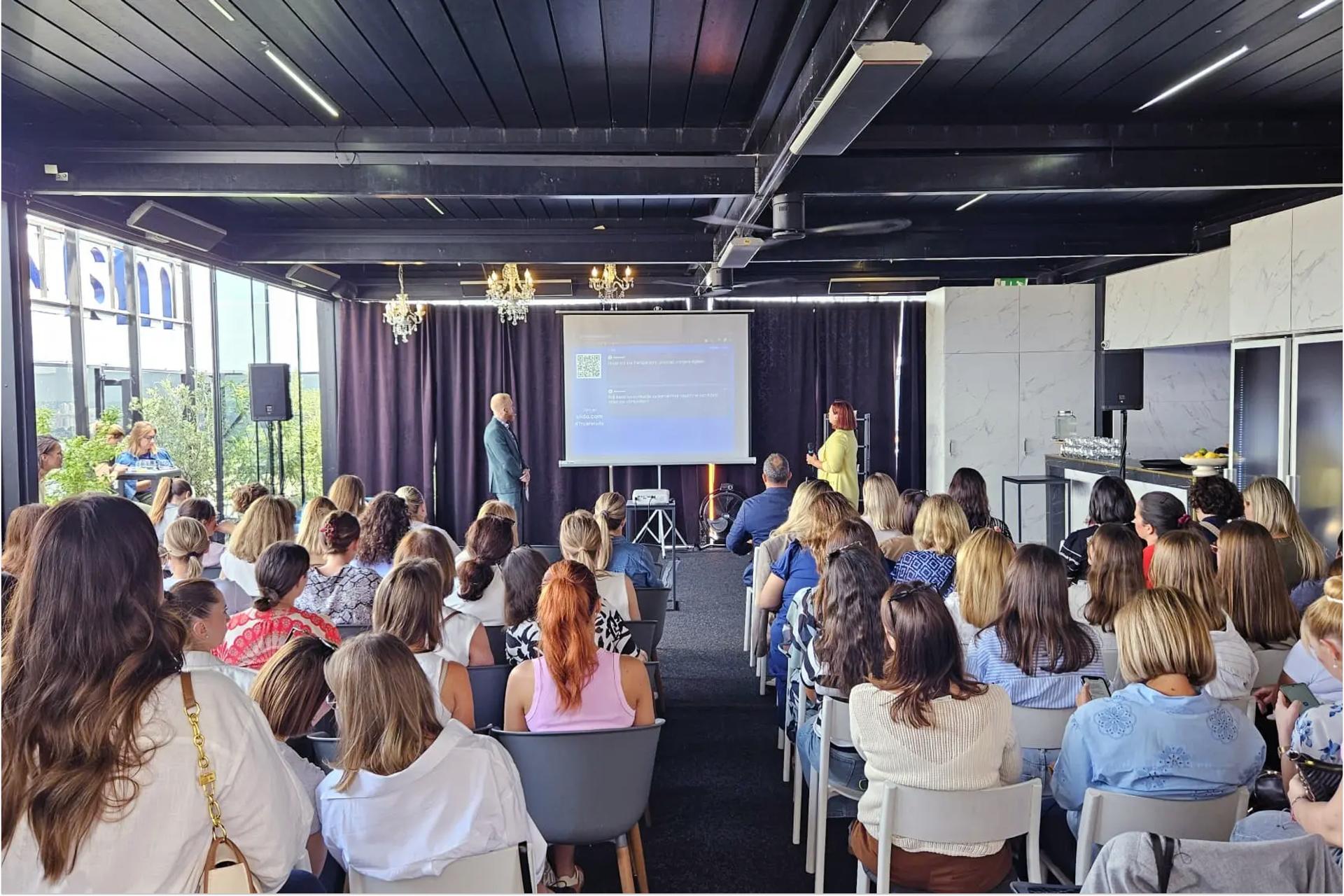
Transparency, Data, and People: What We Learned at the HR Time Gathering in Zagreb

News for the User Experience Community: UX Research Academy for Everyone – Completely Free


